Article 6 - Classroom and beyond
- ascalise121
- Sep 10, 2020
- 2 min read
Updated: Sep 12, 2020
The physical space we learn in has a great impact on the effectiveness of our learning. “Outdoor spaces are a feature of most Australian early learning settings and have potential for many learning opportunities.” (Merewether, Jane, 2015). Students become more immersed and involved in the learning and they can learn from new people other than their teachers. Advantages of learning experiences beyond a classroom for students is that it can help students be more excited and motivated to learn, they can be more physically and socially active and it can trigger more creative thoughts than a traditional classroom setting. Disadvantages to these are students who are introverted may feel nervous to leave the classroom and might find it hard to participate. Because students can be more physically and socially active, they can get far more distracted than they would in the classroom. There are also children who may prefer to work quietly in a classroom setting, and struggle with the noise and sometimes fast pace of an out of classroom experience. From a teacher’s perspective, they are able to create new and creative ways of teaching, they also help expose students to real world experiences and let them investigate in groups or individually. Negatives to this are that if the lesson is not well-prepared students will not pay attention and can be disengaged, it can also be stressful to keep on top of top safety measure to ensure each student is safe at all times. Students may also get false information if they are working in groups the whole time and still need the teachers support.
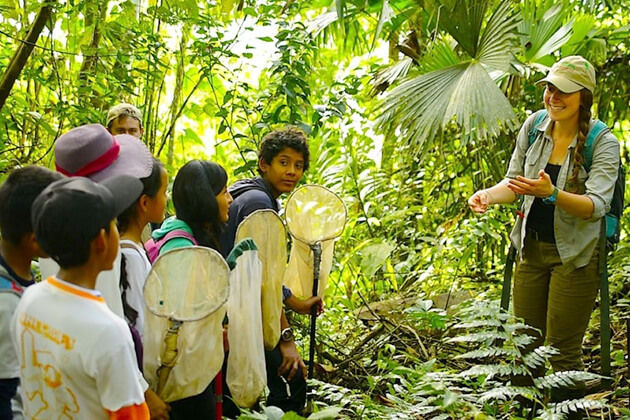
Educational school trip, 2020. The importance of educational trips in teaching and learning. Retrieved 7 September 2020 from


Comments